Inhalt des Dokuments
News:
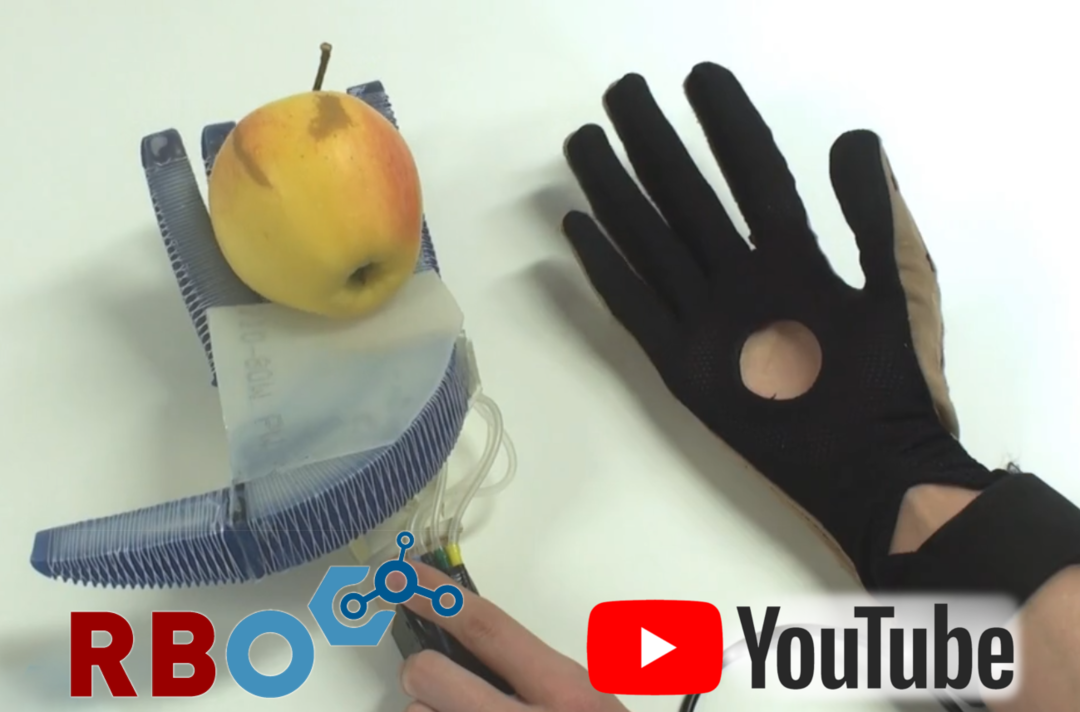
Tutorial for making PneuFlex actuators
Tuesday, 05. March 2013
We're happy to announce you a freely available tutorial and video on how to make your very own PneuFlex actuators. And to celebrate, we are also giving away demo kits to other labs!
Free demo kit contest
Make a KUKA Youbot follow you around
Monday, 04. March 2013
A team of students implemented controllers for making our KUKA YouBot follow visual targets by using all eight available degrees of actuation.
Here you can watch the YouBot tracking the blue circle like a dog would a treat!
Change of address!
Monday, 25. February 2013
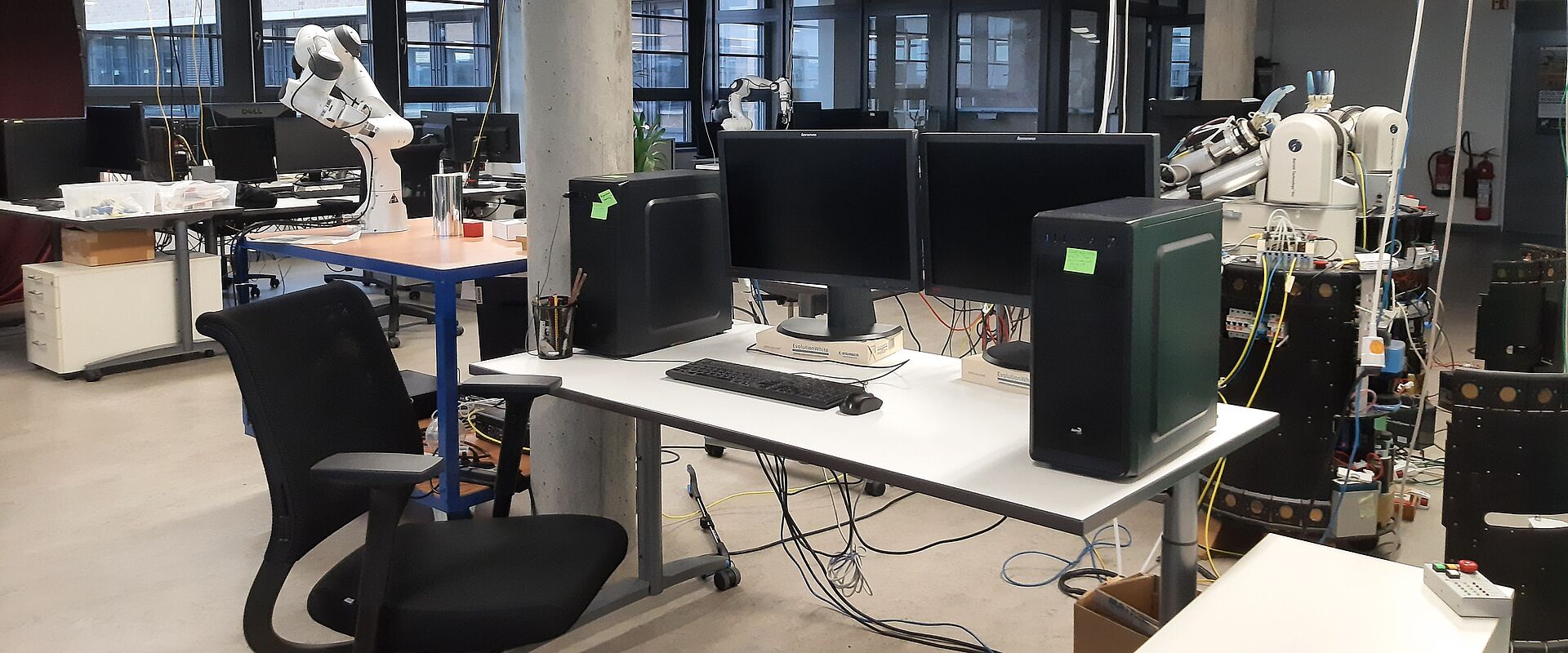
We are about to move. Our new address is:
TU Berlin
Robotics and Biology Laboratory
MAR 5-1
Marchstr. 23
10587 Berlin
The office is in room 5.032.
Selected Poster Award on CASP 10 Meeting
Tuesday, 11. December 2012
Exciting news! Our poster "Going Beyond Fragments - Using Building Blocks to Guide Protein Structure Prediction" has been selected by David Baker, Nick Grishin and David Jones for a poster talk together with three other posters on the CASP 10 meeting in Gaeta, Italy. We are very happy that our approaches got the attention of the top researches in the field. We enjoyed the lively discussions about our ideas as well as other approaches a lot and are eager to further work on our methods when we are back in Berlin.
Here you can download our two posters that we presented on the CASP 10 meeting:
CASP 10 results are published
Thursday, 6. December 2012
From May 2012 to August 2012 the Robotics and Biology Lab participated in the 10th Critical Assessment of Protein Structure Prediction (CASP). During this period the CASP organizers released a new protein target sequence every two days for which the structure was unknown. Each participating group had to predict the structure for this sequence completely blind. As such, the experiment provides a basis for objective comparison of prediction algorithms and methods. On Dec, 5th 2012, the CASP assessors published the results of CASP 10. They evaluated for each prediction how close it is to the experimentally determined native structure based on several measures. Despite their early stage of development, all our servers (RBO-MBS, RBO-i-MBS, RBO-MBS-BB, RBO-i-MBS-BB in structure prediction category and RBO-CON in contact prediction category) performed as expected and we are very excited that our server RBO-i-MBS ranked on position 19 among all servers (68) based on the best out of five predictions for hard targets (FM-targets). We are currently analyzing the results of all our servers to prepare posters for the coming CASP meeting, which takes place from 9th to 12th of December in Gaeta, Italy. You will find a more detailed description of the algorithms running on our servers in the CASP abstracts.
Robotics: Science and Systems 2013 @ TU-Berlin
Monday, 03. September 2012
We are very excited to bring Robotics: Science and Systems 2013, arguably the top conference in robotics, to Berlin next year! RSS '13 will take place June 24-28 2013 at TU Berlin. We look forward to welcoming the world's roboticist to our city, our university, and to our lab!
ROS Release of Interactive Perception Framework
Monday, 03. September 2012
We are proud to announce that we have made an open source release of our Interactive Perception Framework to the ROS (Robotics Operating Framework) community!
Find out more: http://www.ros.org/wiki/iap
RBO enters CASP10
Wednesday, 02. May 2012
We are happy to announce that the Robotics and Biology Laboratory participates at the 10th Critical Assessment of Structure Prediction (CASP). In this experiment, computational group have the opportunity to challenge their ideas and algorithms to predict protein structures, only by their sequence. These structures are not yet published or can be found in any public database. Thus, the predictions in this experiment are real predictions (instead of post-dictions that are used to benchmark algorithms).
Our lab participates with a total of 5 prediction methods to challenge different methods that have been developed over the last 2 years. We are excited to see how they perform in the experiment.
Cluster
Thursday, 05. April 2012
Today, 26 additional nodes for our IBM-Cluster iDataplex have been installed and activated. Our department operates now a cluster with 112 nodes in total consisting of IBM System x iDataPlex dx360 M2 and M3 servers with two Intel Xeon Quadcore-CPUs each.
Our cluster participates in the current competition of CASP.
Soft Hands
Monday, 26. March 2012
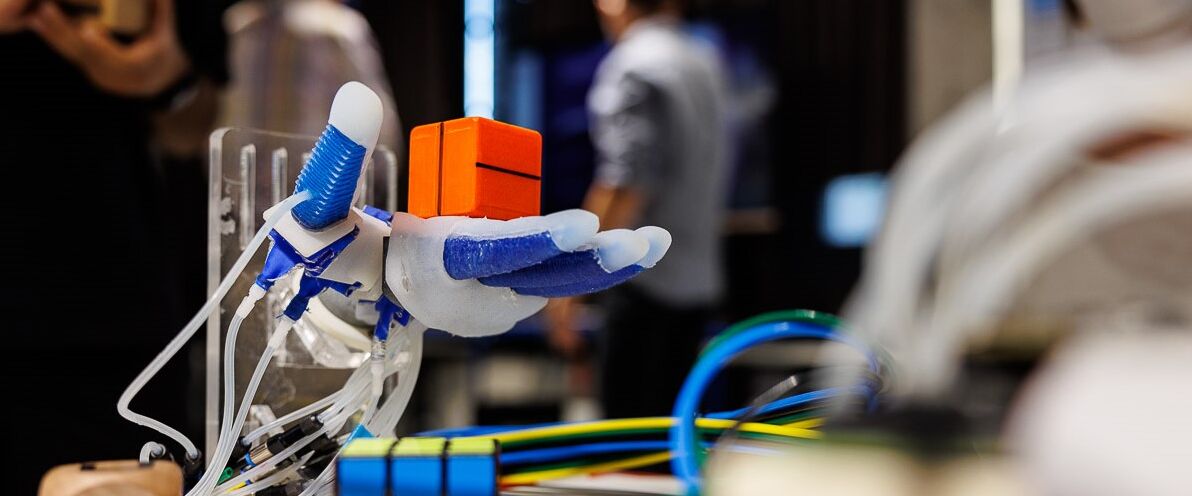
The Robotics and Biology Lab is expanding its hardware capabilities with a promising technology from Soft Robotics. It is now set up to create elastic robotic manipulators that are made of rubber, and are actuated by compressed air. This latest addition to its tool set will enable the lab to explore and understand grasping synergies, as well as create compliant manipulators that are compatible with grabbing affordances of everyday things intended for human hands.
Here, you can have a look at our very first prototypes for evaluating the production setup.
March 26, 2012
SCIoI Master Track
Friday, 20. May 2011
Understanding intelligence is one of the great scientific challenges of our time. Yet, in spite of extensive research efforts spanning many scientific disciplines, our understanding of intelligence remains fragmented and incomplete. Science of Intelligence (SCIoI) is a transdisciplinary research approach. Researchers from FU, HU, and TU Berlin work together in order to obtain a better understanding of intelligence. Their cooperation in the central fields of thinking, learning, and perception offers an interdisciplinary environment to students. The SCIoI Master Track is transmitting basic knowledge about potential future-oriented technologies very much appreciated both by industry and academia.
The first seminar series of imi-berlin (interaction, modeling, intelligence: www.imi-berlin.org) has started.
The regular biweekly meetings take place on Monday, 4 pm, room EN 189, and serve as a platform for an informal exchange and discussions between school of EECS members.
New job opening topic: motion generation for mobile manipulation
Robotics and Computational Biology.
Zusatzinformationen / Extras
Quick Access:
Auxiliary Functions
Professor Dr. Oliver Brock
Office hoursFriday 10-12,
please make an
appointment
Secretary
Henrietta SchifferTel. +49 30 314-73 110
Fax +49 30 314-21 116
Room MAR 5.032
e-mail query
Mon-Fri, 10:00-12:00pm
Alternatively ask for
an appointment
Address
TU BerlinFakultät IV, MAR 5-1
Marchstraße 23
10587 Berlin
Germany